
Editorials
ARTup Secures European Patent: A New System for Evaluating, Authenticating and Connecting Physical and Digital Art
Oct
A long journey comes to an end. A new journey begins!
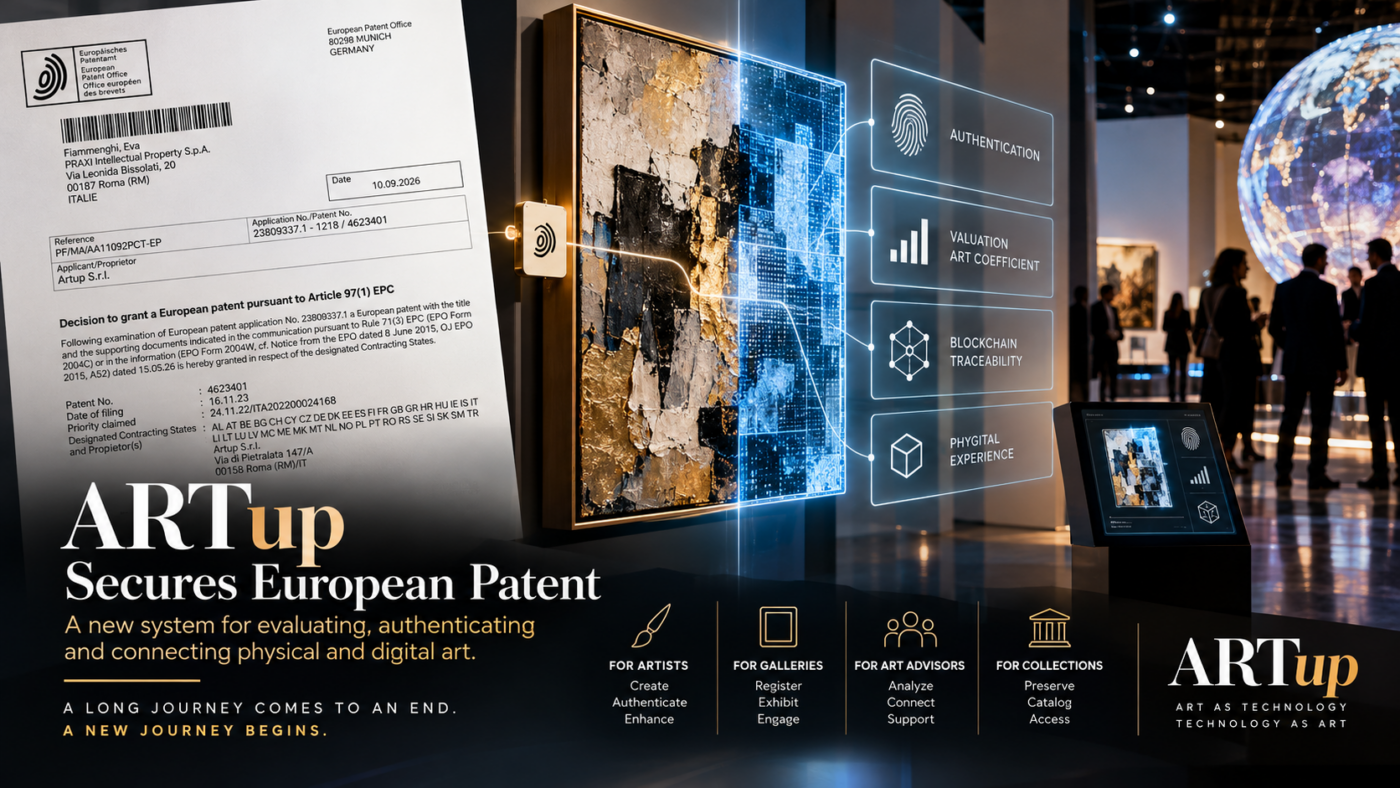
Today, ARTup reaches one of the most important milestones in its history: the publication of European Patent EP 4 623 401 B1, entitled “System for Physical and Digital Art and Method for Evaluating and Authenticating a Work of Art.”
It is the result of years of research, experimentation and development focused on a fundamental question: how can new technologies provide practical tools for artists and the entire art ecosystem?
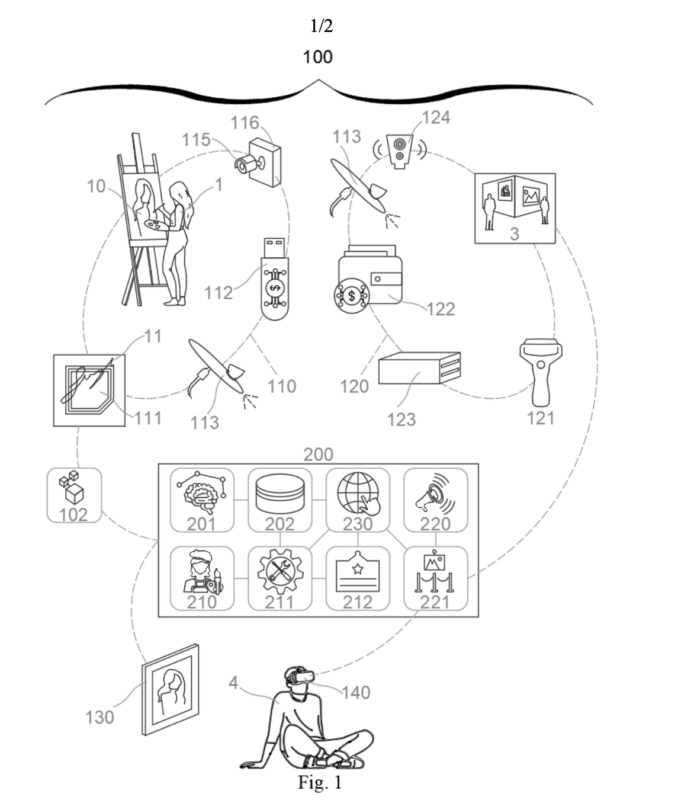
ARTup’s answer is a technological process that integrates Artificial Intelligence, blockchain, IoT systems and phygital tools, connecting the artist’s identity, the physical or digital artwork, and the information generated throughout its lifecycle. The patent documentation describes a system for exhibiting, buying and selling, blockchain-based certification and economic evaluation of artworks, complemented by specific tools designed for artists and professional art-market operators.
How Does ARTup’s Patented Process Work?
The process starts with the artwork and its creator.
Through a Producer Kit, an artist can associate an artwork with a digital identity by means of a token linked to a physical tag, using technologies such as RFID, NFC, Beacon or similar systems. The patent also provides for anti-counterfeiting devices, wallets and tools designed to establish a connection between the physical artwork and its corresponding digital identity.
The second component concerns the dynamic evaluation of the artist and the artwork.
The patented system introduces an evaluation algorithm that considers five dimensions relating to the artist — Identity, Notoriety, Virality, Reputation and Performance — to determine an initial value defined in the patent documentation as the Absolute Art Coefficient.
This information is subsequently processed together with other data through Artificial Intelligence systems and information recorded within the platform, producing a dynamic Art Index. The relationship between these parameters generates the Art Coefficient, conceived as a dynamic indicator of the value attributable to a specific artist’s signature at a specific point in time.
The third component concerns authentication, traceability and the phygital experience. Blockchain, tokens and tags make it possible to connect an artwork to its digital identity and associated data, while the system includes tools for exhibition spaces, transactions, and physical, digital, virtual and augmented experiences.
Put simply, ARTup aims to create an infrastructure through which artwork, artist, data, authentication, evaluation and exhibition experience can interact within the same ecosystem.
Innovation Designed for Those Who Create, Manage and Protect Art
The technology is not intended exclusively for artists.
Artists can experiment with new tools for identifying, authenticating, documenting and enhancing their artworks, establishing continuity between the physical object and its digital dimension.
Gallerists and professional art-market operators can experiment with tools for registering artworks, organizing exhibition spaces, managing information and certifications, and creating new phygital experiences for collectors and visitors. The patent specifically provides for a Manager Kit intended for professional operators, including galleries and auction houses.
Art advisors can work within a more structured information environment in which identity, history, data, authentication and dynamic indicators can be interconnected, adding new quantitative tools to their existing critical and professional expertise.
Custodians, managers and administrators of public and private collections can explore new methods for identification, cataloguing, traceability, authentication and digital access to cultural assets, creating a bridge between physical conservation and digital infrastructure.
The objective is not to replace curators, critics, gallerists, advisors or other art professionals with an algorithm. It is to provide them with a new technological and informational layer with which to experiment.
From the Patent to FARo 4.0 Envelopment
And this is where the next journey begins.
Starting today, at Atelier Montez, ARTup is setting up a live demonstration of the industrialized patented process through the FARo 4.0 Envelopment: an environment in which the different technological components can be applied to and tested with real artworks and within real artistic, curatorial and exhibition processes.
The patent, therefore, will not remain on paper.
We want to put it into the hands of the art community.
ARTup Bounty Program: Now It’s Your Turn
Over the coming months, ARTup will progressively open its Bounty Program to artists, gallerists, art advisors, curators, and custodians of public and private collections.
The goal is to move from patented technology to real-world experimentation: onboarding art professionals, registering and digitizing artworks, applying authentication and phygital identification tools, experimenting with the Art Coefficient, and testing the potential professional applications of the entire ARTup ecosystem.
Each stage of the Bounty Program will help collect experiences, use cases and feedback directly from art-world professionals.
Our invitation is therefore simple:
Bring an artwork, a collection, a gallery, a curatorial project or a real-world case to experiment with. Join the ARTup Bounty Program now!
Over the coming months, follow the different stages of the ARTup Bounty Program, participate in testing at Atelier Montez, and help us discover how far this new paradigm can go.
A patent represents the recognition of an invention.
The next challenge is to transform that invention into a useful standard for the international art community.
A long journey has come to an end. Today, a new one begins.
Read European Patent EP 4 623 401 B1 published by the European Patent Office