Tag Archives: Atelier Montez

Press Release Art Trek 2025

Republic of the Philippines, September 26, 2025 – Filipino art academies are currently closed due to tropical cyclone Bualoi, which struck the islands today, causing landslides and floods and further aggravating a situation already marked by weeks of devastation from typhoons. In this critical context, a glimmer of hope arrives from Rome: Atelier Montez renews […]

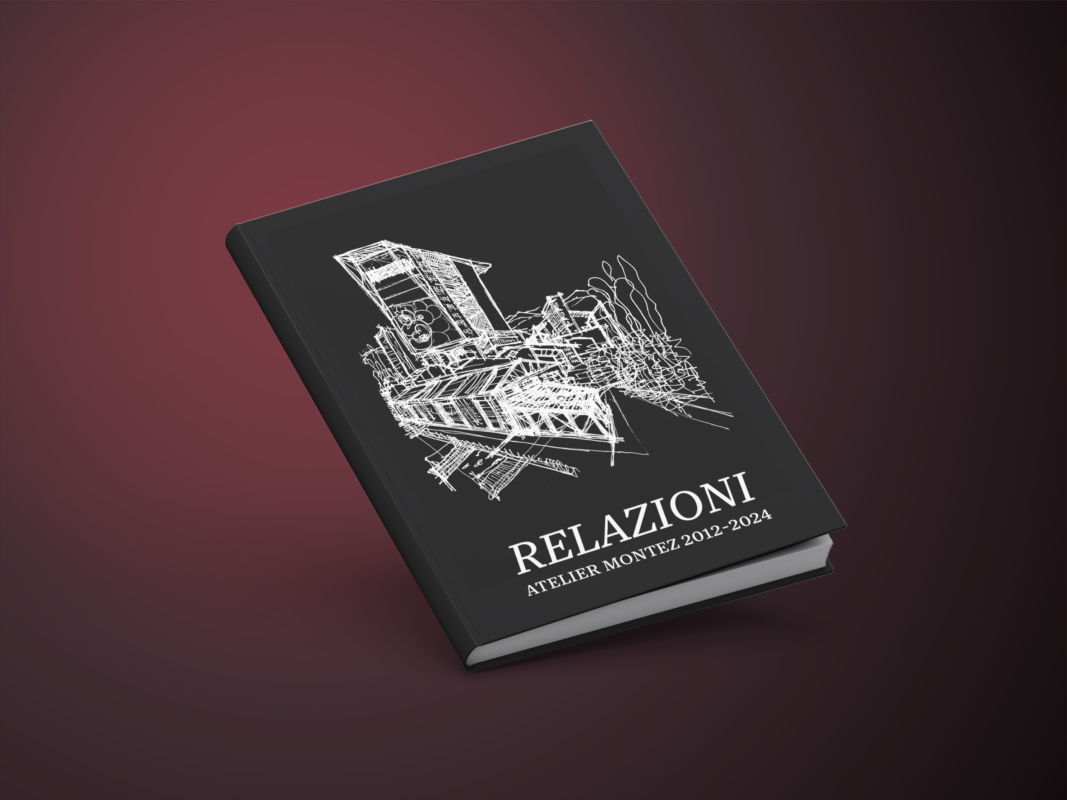
“Relazioni Montez 2012-2026”

Relazioni 2012-2026

Relazioni is not a catalogue in the conventional sense; it is a field of forces. What unfolds across its pages is neither a linear archive nor a static inventory, but a living topology of encounters—between artists, works, gestures, and the social bodies that sustain them. Emerging from the ecosystem of Atelier Montez, this publication traces over a decade of shared practices, where creation is inseparable from proximity, and proximity becomes method.

Since its foundation in 2012, Atelier Montez has operated as a relational device: a space in which artistic production is continuously negotiated through dialogue, friction, and collective experimentation. The catalogue reflects this condition not as documentation, but as extension—an active surface where past actions remain operative, and where each contribution reactivates the network it belongs to. ([Atelier Montez][1])fore resists closure. It does not conclude; it accumulates. Its structure—articulated in phases rather than chapters—follows the rhythms of transformation that have shaped the atelier: moments of emergence, consolidation, rupture, and reconfiguration. What is mapped here is less a history than a density of relations, an evolving grammar of collaboration in which authorship is distributed and meaning is co-produced.

At its core lies a precise intuition: that contemporary art, in order to remain vital, must exceed the object and inhabit the interval between subjects. In this sense, Relazioni functions as both archive and interface, recording a decade of artistic processes while simultaneously inviting new ones to take place. Each page is a threshold; each work, a node in a larger system of affective and intellectual exchange.

To read this catalogue is to enter a network already in motion. It asks not for passive observation, but for participation—for the reader to recognize themselves as part of the relational fabric it describes. In doing so, Relazioni extends beyond the book, continuing its trajectory as a living map of connections that remain open, generative, and unfinished.